Thursday, January 22, 2009

What are some of the ways that you get and stay highly productive?

Cygenex Asks:

How do you get in “The Zone”?  I would like to know how you achieve a state of maximum productivity.  How do you stay focused and avoid distractions?

Rob’s Answer:

Motivation is an incredibly hard thing to quantify and conjure when needed. The problem is that motivation is different for everyone at different times.

Personally, here are the things that I find help:

1)
I lead a simple personal life.  I have a nice family, a small house and friends I care about.  Most of the time, my personal life is reliably nice and I strive to maintain that consistency.

2)
For the most part, I know myself.  I know what I need to be happy.From a less personal perspective, these things contribute to my productivity:

3)
I need to control the space I'm in.  It sounds odd, but I am most productive when I can control things like the lighting, the temperature, noise, and the people who enter my space.

4)
I have natural light lamps.  Even in the summer where I live, natural light is sometimes hard to come by and using a couple of these lamps to deliniate between high and low productivity times really helps me.

Many natural light products are marketed to people who have been diagnosed with Seasonal Affective Disorder (S.A.D.).  These lights however, have been proven to adjust moods and solve sleep problems for everyone. 
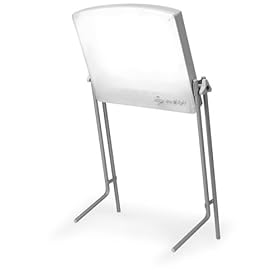

This desktop, natural panel light from Amazon is portable and easy to position for comfortable, healthy light.
 
As a bonus, I find that using this light to combat Jetlag when I return home from a trip significantly reduces the amount of time I feel out of sync!

5)
There is a natural rhythm to productivity and listening to yourself to know when those times are is very important.  No one is productive from 9 until 5pm.  Being aware of the queues you feel and acting on them dramatically increases productivity.

6)
Music and ambient noise can queue productivity.  Personally I am usually the most productive between 6am and 11pm.  I play energetic music that I like and "bust out the work" to get things done.

Other times of the day, I'll play low key music and contrast it with bits of high energy music from the morning when the waves of productivity come in.

CONCLUSION
You can't be told to be productive.  You need to listen to yourself and learn how to use the queues that inject productivity into your day.

Using things such as music, environment, lighting, etc can help when combined with a clear and quiet mental state

Wednesday, January 21, 2009

I am trying to brainstorm products and services to sell online. I’m having a difficult time narrowing down the choices to put forth my best effort.

Dhawk Asks:

Do you pay for services on the web?  What type of services do you pay for and how much do you pay per month?

Rob’s Answer:

This is an interesting question.  Thank-you for posting it and making me reconsider the fundamentals of eccomerce.

1) DIRECT ANSWER

Personally, here are the things that I subscribe to or regularly buy:
Website Hosting (a couple of servers in a couple of locations)
iTunes
Audible
Geek uniforms from here: http://www.teefury.com/

One of the things that people won't necessarily admit to is online pornography subscriptions.  While I've never subscribed to a site, I know that the revenue received from adult sites eclipses any other form of online sales.  Personally, I chose not to do business in this arena but understand the importance of it online.

2) SPECULATION AND RESEARCH

Since the Internet changes perpetually, I try to constantly think about what people want to purchase and subscribe to.

This article lists 8 categories that I think pigeonhole current successful ecommerce:
http://www.kk.org/thetechnium/archives/2008/01/better_than_fre.php

Those categories include:
Immediacy
Personalization
Interpretation
Authenticity
Accessibility
Embodiment
Patronage
Findability

While this specific article discusses piracy and the changing practices of media distribution, I find these categories to be timely and accurate when applied across multiple arenas.

When evaluating new products and services to spend my time on, it is helpful to think about each of these 8 categories.  If a product or service overlaps across 2 or more categories, the value of that product or service increases.

Combining these 8 categories with Maslow's Hierarchy of Needs results (more often than not in my experience) with a winner.

http://en.wikipedia.org/wiki/Maslow%27s_hierarchy_of_needs

Maslow quantified the basic needs of people.  When these needs are met, people become compelled to purchase a product.  When that product is compelling AND exists in one or more current economic trends, you again increase your odds of success.

3) REAL WORLD EXAMPLE

Mahalo Answers is a good example of a product that will likely be successful.

It fits into these categories:
Immediacy
Interpretation
Patronage
Findability

Mahalo Answers also fits into these Maslow groups:
Self-actualization
Esteem
Belonging

So Mahalo answers is (on the surface) a strong product.  Some other factors that I would want to carefully review include: management, labour, structure, competition and revenue model.  With clear and correct information on all of these things, you would have a good idea as to the specific strengths and weaknesses of the productat a low level.

I hope that this helps!

What do you think of this blog post about saving money by making smarter automotive decisions?

Used Car Genius Asks:
 
I'm most interested in hearing about how the topic affects you personally, and if reading that post would make you want to come back to the site for more information on saving money by making better automotive choices...

http://blog.usedcargenius.com/?p=178
 
Rob’s Answer:

Personally, I am currently searching for a new (or used) car. Your article was interesting and while it didn't necessarily give me any new information or insight, I was glad to read it.

I think that it would be a good small town, local newspaper article but that it is not positioned well for a blog. Here's why:

1) Your points are clouded with words.

Cut down on the number of words you use and prove your points in other ways.

2) You have an interesting title, but I don't feel like the article gave me an answer.

Trust is a funny thing online and if you're trying to build readership, honest, well proven / supported posts are key. I like that you made that post and mentioned that you own a dealership, but I don't like generalities that made up the proof.

3) I Would Like More Information

In your 4th paragraph, you outline the meat and potatoes of the solution. This is where I want more information that is easy to find. I didn't feel the desire to click through to any other articles on your blog because they weren't avaliable to me where and when I needed them.

You might have some other great articles about "researching a puchrase", finding "a great deal from a motivated seller", "finding a great repair shop based on trusted recommendations", etc. But, how would I know? When I've scrolled down to that section of the page, all I see are random tags and categories.

Contentiously think about where people are looking when they read your articles. Provide links (images work best) to alternate articles, advertising, or off-site information. This is referred to as contextually generated content and is most effective on small growing blogs manually.

I hope that these few points help Used Car Genius!

Monday, January 19, 2009

How Much Should A Small Business Website Realistically Cost?

Scogs asks:

“How much should a small business website realistically cost?

I'm looking at getting a website built for a small business. I won't need any copy written, nor will I need a logo designed. All I really need is a few templates built and a lead capture form and DB (I'm pretty savvy at managing web sites, just not designing them). Anybody have any experience with actual costs? Any recommendations would be helpful as well.”
 
Rob’s Answer:
This question has too many variables to be answered adequately. Further clarification is required to provide a clear and accurate answer.

It sounds like you're in the same boat as many programmers. They can spin some outstanding code, but their code almost always looks better than their front-end design.

SOME GENERALITIES THAT YOU LIKELY KNOW:
A business website is an extension of your entire marketing plan. Websites have the unique advantage of being able to generate income; no other form of marketing can directly impact sales.

With these 2 facts in mind, it is important to design a clear, stylish, and above all else effective 24x7 online storefront for your business. At first glance, many inexperienced people will consider a "storefront" overkill for the first website that a small business creates. While I'm not necessarily suggesting full ready-to-go ecommerce functionality, I am suggesting that you take the look and feel of your store (or your brand) and convey the same feeling and information online. Every successful website follows this basic rule.

CREATING IT YOURSELF:
Unless your business is making websites, don't do it yourself. Websites take a lot of time to create and only someone who has a lot of experience can create a website that is polished and professional. You're good at whatever your business is - focus on that and focus on relaying the information that potential customers need.

It sounds like you're on the right path. If you have the skills to render some HTML (etc) then asking a pro for a nice design will work well.

GENERAL COSTS:
Basic websites (simple brochure) sites cost from $500 to $2000.

This cost would give you the basic design, a couple of blank pages to use as a template for additional content, graphics, coloring, consultation, etc.

The range in price will be based on experience. People with extensive portfolios can charge more since their work is proven.

PROJECT PLANNING:
There are a couple of different places that you can get design help. However, all of these sources will fail without a very clear outline of what you want. Compose a "RFQ" (Request for Quotation); this document should contain a full written description of what you want along with some hand sketched block illustrations outlining what you're thinking. While it's important to carefully outline what will make your project successful, allow the designer to be creative and think on his/her own.

SOURCES OF LABOUR:

1)
Review these gallery websites:
http://www.google.ca/search?q=CSS+Gallery&ie=utf-8&oe=utf-8&aq=t&rls=org.mozilla:en-US:official&client=firefox-a
Form a solid list of designers that you like. E-mail them your RFQ and ask them to return a quote.

2)
Submit your RFQ to web based freelance sites like these:
http://www.rentacoder.com/
http://www.getafreelancer.com/
http://www.elance.com/
http://www.guru.com/
http://www.scriptlance.com/

By finding a web designer using the first method, you'll receive a higher quality product, but you'll pay more. By finding a web designer using the second method, you'll pay less, consume more of your time, and receive lower quality work.

3)
Crowdsourcing works sometimes. For an upfront posting fee, people will submit designs and try to "win" the project at http://99designs.com/

Best of luck Scogs. I really hope that this helps you out.

Source(s):
I'm an I.T. pro with specific experience developing websites.