A lot of people ask about the sources of traffic.
Here's a list in no particular order:
1) Directories
Directories are website listings. The trick is to find a directory which receives huge volumes of traffic itself. Start by applying for listings in Yahoo, DMOZ and Looksmart. While these may not be the best directories, it's a start. Getting listed isn’t easy but once achieved you will see a significant lift in your website traffic. Look at other directories but make sure they have a good traffic rating (use Alexa).
2) Reciprocal Links
This is the oldest form of web traffic and is still one of the most effective. Simply having your website listed on other websites and listing websites on your own is a great way to receive traffic. By swapping links, webmasters hope that people will click on their link in other websites thereby generating website traffic. It also is highly rated by search engines. The only trick here is to ensure that you're links are all relevant and active.
3) Article Writing.
Write an article on any topic which interests you, optimize it for keywords and be sure to include your website URL in the bio line at the bottom of the article. Then submit it to blogs, ezines, directories on the web. This will generate website traffic and create backlinks to your site, which in turn helps with search engine rankings.
4) Search Engine Optimization (SEO)
Make sure your website is search engine friendly. Ensure all the meta and alt tags are completed, optimize the text for your chosen keywords, ensure there is an H1 header, update your robots.txt, update your google sitemap. Punch your website in here to simulate how a Search Engine will see your page http://www.seochat.com/seo-tools/spider-simulator/
5) Blogs
Blogs are a lot of work and if you're not prepared to put in the time required to regularly create compelling written content than skip this step. If you are going to updtate a blog with compelling content ensure your blog is hosted on your site, that it links to your important pages and that you ping each time your blog is updated. A regularly updated blog will attract readers which in turn builds website traffic.
6) Social Networks, Forums & Blog Comments
Becoming a member of online communities such as forms and blogs will encourage high quality traffic. Leaving your URL in forums will generate website traffic in two ways. First, people who read your post are likely to click the link to checkout your site. Secondly search engines will generally accept the link a counting towards your link popularity. The "nofollow" search engine command is usually employed by siteowners to distract from blatent spamming. Become an active good member of online communities and this will work well.
7) Viral Advertising
If you have a message and you tell 10 people and they each tell 10 people and so on, by the time the message goes through 10 levels it has been passed on to a million people. This is a comon tactic on sites such as Youtube. Many progressive online busienss owners know that creating interesting content that can be easily shared is an important part of success.
8) Traffic Exchanges
Traffic that is productive on one site may not be productive on another. If you can identify this traffic and re-route it either on your own site or to another (in exchange for some of theirs), you'll be further ahead. Google does this - if you preform a Google search from the U.K., the first page of results will usually be U.K. related. Ad Networks also commonly do this - if their algorithm says that they don't have any relevant ads to serve, they'll retrieve one from their "partner" ad networks to display instead.
9) Classifies Ads
Do a search for “classified ads” and you will find many sites, which accept classified advertisements. Make sure you place your ad in a site complimentary to your product. Generally sites at the top of Google/Yahoo searches will perform better than those lower down. Just remember not to be spammy and ensure that the words you use sound (and are) legit.
10) Purchased Traffic & Pay Per Click Advertising
Programs like Google's Adwords will deliver pre-qualified targeted website traffic to your site. There are also a plethora of different ways to buy traffic from various different sources. On some online industries (adult for example), purchasing traffic can be the best, easiest way to increase revenue. However, many online businesses have found that purchasing traffic doesn't work. Often there is a surge is traffic, but not a surge in sales. Between hosting costs, resource consumption, etc buying traffic can easily cost you more than the upfront fee if not done with care.
Thursday, February 26, 2009

Wednesday, February 11, 2009
What is the future business model of the music industry?
Evan Asks:
Major labels are having issues, mainly because the business model they're operating on is obsolete. Obviously the Internet is proving itself to be a major part of the future of the music business, but the new model hasn't quite solidified yet. What will the role of record labels be, will "major" labels go extinct, and how will new artists emerge from the sea of Internet wannabes?
Rob’s Answer:
It's been prophesized [1] that there are 5 possible business models that the music industry could adopt or be forced into.
1) FREE
This is the easy choice for consumers. It's already very easy to obtain current music for free. A lot of money, time and effort goes into releasing albums for free.
However, this is a conceivable business model. Already, artists and labels know that diversified income results in the greatest profit. Sean Combs is well known for his empire of clothes, jewelry, accessories, let alone his popular music.
It's completely possible that music profits could be sustained by monopolizing on success in areas beyond music.
2) PAY WHAT YOU WANT
Radiohead made the biggest splash with this. However, it's been going on for years at local concerts all over North America. It's common place for a band to load up a table with CD's and ask $20 for them. The band may not necessarily get their asking price, but chances are they'll sell a good number of CD's if they're open to negotiation.
3) PAY BY POPULARITY
This idea is pretty self explanatory. However, if this was a viable option, why hasn't iTunes implemented it?
Apple makes very little per song [2]. Just like CD sales, iTunes is still responsible for splitting the revenue from each sale with a bunch of different people. It would make sense that they'd want to make more money and the best way to do this logically would be to charge based on popularity.
4) SUBSCRIPTION
The subscription model seems to be the most attractive in a compromise between consumer demand and publishers. Consumers would purchase a subscription just like NetFlix but rather than renting DVD's, they receive professionally encoded (high quality) digital audio.
The biggest problem with this scenario is that publishers are currently stuck on DRM (Digital Rights Management) issues. Consumers are currently demanding that content be available across the electronic devices they own. DRM is currently clunky, insecure and worst of all, horribly inadequate.
5) MUSIC TAX
As the name implies, the music tax is favored by governments (Canada especially) and Publishers alike. Quite simply, put a levy on each sale to offset the effect of piracy.
The huge problem with this is that the folks who are paying for music are penalized while people who download illegally aren't. That doesn't seem right at all.
CONCLUSION
The underlying issue to finding a business model is being overlooked by the Music Industry. They are so caught up in piracy and DRM technology that they are missing the fact that it's the product itself that's the problem.
I'm not saying that music is any better or any worse than it has been. I'm saying that the products that Producers are assembling and marketing do not reflect consumer demand.
Due to our recent history (Napster, Gnutella, Torrents, etc) consumers have devalued music and as a result, the music industry needs a complete overhaul. The industry needs to put quality and consistency in the forefront. They need to take a combined approach of these 5 methods to form products that can be (in part or in low quality) be given away for free, subscribed to, etc.
Above all else, at this moment advertising (online and offline) is going through a revolution. Advertising is in a state of disarray and everyone, including the music industry needs to redefine how they make money from ads. The comments given around this topic at the Grammys [3] are a direct example of this revolution.
The bottom line is that the music industry (as a whole) needs to carefully and completely reconsider itself.
Source(s):
[1] http://www.last100.com/2007/10/11/music-industry-five-alternative-business-models/
[2] http://communities.canada.com/ottawacitizen/blogs/bitsandbytes/archive/2008/10/02/how-apple-wrecked-the-music-industry-s-business-model-over-a-nickel.aspx
[3] http://ca.news.yahoo.com/s/reuters/090206/entertainment/centertainment_us_grammys
In addition to these sources, I have deeply and professionally considered music piracy on the Internet and specifically P2P networks.
Saturday, February 7, 2009
What are the similarities and differences between Montessori and Waldorf methods?
Shaz Asks:
If you have experience with either of these education methods, please describe a typical day in the life of a kindergarten student.
Rob’s Answer:
I do have experience with both of these methods. I was a classroom teacher before engaging my entrepreneurial spirit. I have deeply considered, researched and experienced both systems.
1)
A Preface
The education that your child receives in a classroom is almost completely dependent on the teacher. There are several different methods of teaching and the best teachers know how to adapt the lessons that they teach to each individual. Teaching takes an incredible amount of experience, energy and care. First and foremost, evaluate the teachers who will be teaching your son or daughter in both systems and allow your careful considerations on this single fact play a major roll in choosing a school for your child.
2)
Sticking With The Program
Once you make a decision about the quality of instruction at a particular school, it is important to realize that there are significant and far reaching differences between Montessori and Waldorf schools.
Once a child is exposed to either system for any length of time, it will be very difficult for the child to switch. I have personally experienced children who have been moved from Montessori programs into Waldorf programs. The transition is difficult, frustrating, and significant for parents and children alike.
3)
Montessori vs. Waldorf
The key difference between Montessori and Waldorf methods is that in Montessori, the day is not divided between work, rest and play periods. Children are given the opportunity to choose their own activities in the classroom. On the other hand, Waldorf programs maintain scheduled activities that are adhered to through "periods" and often "days".
Each system has unique benefits. These benefits cater as much to the teaching styles of the instructors as they do the learning styles of the child. The unstructured play of the Montessori system fosters creativity and self awareness while the Waldorf system caters to the natural rhythms of development that children thrive on.
Beyond these core differences, you'll find that the subjective nature of teaching styles and environment play a major role in the comparisons that have been done. For example, Montessori evangelists will say that their system puts math and language first. Waldorf supporters will say that their proven system gives equal time to development in all areas. Understandably, these differences along with other common comparisons are not concise and differ from school to school.
4)
Typical Day
A typical day of a kindergarten student will be based on the structure that is set out by the school and more importantly in kindergarten, the teacher. You could receive anecdotal, generalized descriptions however the only real way to tell what a day in the life will look like is to sit in a classroom. If possible, I recommend that you volunteer your time in the schools you are considering. You will get an in depth view and know exactly what happens.
I hope that this provides some insight and helps you in your decision!
Thursday, February 5, 2009
What is the best way to monitor a network and attached devices?
Jgraves Asks:
I work at a large campus with many servers and switches from different vendors. We have 2 internet connections, T1 and microwave. Our main campus has many buildings joined by fiber and each of these has one or more switch and/or server in it as well. We also have 2 branch locations which are connected over the internet with a vpn connection and we may have another going online in the next month utilizing a point-to-point connection.
What I want is a solution that aggregates the condition of all of our systems and displays the status in a meaningful way. And it should be able to email/text the technicians when there is a problem.
Rob’s Answer:
SNMP (Simple Network Management Protocol) provides devices with a way to report their statistics to us.
"SNMP is used in network management systems to monitor network-attached devices for conditions that warrant administrative attention. It consists of a set of standards for network management, including an application layer protocol, a database schema, and a set of data objects."
http://en.wikipedia.org/wiki/Snmp
All of the devices that you describe could be monitored with SNMP enabled and software from this list:
http://www.monitortools.com/snmp/
OpManage is particularly good:
http://manageengine.adventnet.com/products/opmanager/index.html?snmpmtr
Jgrave’s Feedback:
Thanks for the info on SNMP as the backbone technology. OpManager looks like it might be our best solution.
Tuesday, February 3, 2009
What is the most reliable way to access the Internet while on the road?
Marc Asks:
I’m looking for realistic solutions that allow people to work from the road, like full-time RV'ers, etc. I know WiFi is an option, but it requires specific locations, etc. What is the best range of EVDO, and is there something better? Perhaps satellite (although not quite as mobile)?
Rob’s Answer:
This is a difficult question to answer because the best answer depends on exactly where you are. Some services will work better in some areas than others.
Specifically speaking to full-time RV folks:
Most RV parks have 2 options to connect to the Internet.
1) WiFi
Most parks have large WiFi antennas and advertise coverage. Full time RV'ers will tell you that access is inconsistent. Between lackluster technical support to inadequate hardware (amplifiers, antennas and the like), WiFi is available but often problematic.
Some RV'ers mount inexpensive WiFi antennas on the top of their rigs to catch more of the signal and repeat it locally. Mounting the antenna up above the large tin-cans often yields a much better result and if setup correctly can help your neighbors too.

http://antenna-cosmtec.com/images/upload/YG-001-16.jpg
2) Community Access
Large parks will have a community center. Most that do have a business center like setup with a computer, printer and sometimes even wifi access so that patrons can bring their laptop in, answer emails and surf the net.
Beyond RV Parks, you've already listed the major options:
1) EVDO
This will work well in areas that are covered with good cell coverage. Check with your cellular carrier to find out exactly what coverage is offered in which areas that you're traveling. Don't forget to know exactly what the fees are associated with roaming.
2) Satellite
This is perhaps the slowest but most available option. As long as you can see the westward sky, you can get on the Internet. It's slow packet based transmissions don't work very well for large file transfers and uploads are a large problem.
3) Community / open WiFi
Some cities offer wifi and better still, some urban areas have commercial wifi access available. One of my favorites is to simply drive around popular hotels until NetStumbler says that there is an open available access point. Some hotels offer free WiFi Internet access making this an easy find.
4) Dial up
Good old school dial-up is included with many residential ISP plans. Contact your home ISP to find the dial up networking phone numbers, local exchanges and usage limits. A lot of pay-phones have RJ-11 phone line ports on them now to allow modem connections. This is a good, but obviously slow and cumbersome option.
5) Future
WiMax and other wireless technologies are on the horizon. There is a real need for truly mobile, inexpensive Internet. There will be significant growth in this area in the next 2-5 years.
CONCLUSION
Without knowing more about the specific areas that you're traveling and where you'll be staying, it's difficult to form a best answer to your question. However, with a little planning and a bit of calling ahead, you'll be able to easily find a form of Internet access listed above.
Source(s):
I planned the implementation of a Wireless Internet Service Provider. My Aunt and Uncle also RV full time and love to stay in touch via the Internet.
Monday, January 26, 2009
I want to open a website to sell my photographic art but I’m worried that people will steal my work. What do I do?
Ross asks:
I would like to open a website to sell my photographic art. What do I need for the site security and content encryption to protect my pictures from people taking them without paying for them?
Rob’s Answer:
1)
If you're not already, use Adobe Lightroom.
Not only is it a professional level digitial photogprahic development package (that is outstanding), it will take care of watermarking, metadata, keywording, etc.
Importantly, Lightroom will also allow you to build a template for new photographic collections. With 1 quick export, you can resize, name and upload your photographs to your own, unique template. This will eliminate the need for any sort of Content Management System since you will have full control over your photographic collections.
Lightroom = wicked awesome.
2)
Find good hosting with a reliable policy on bandwidth overage. One of my photos was dugg and boy did it sting.
I didn't think about the overage that would occur on my small gallery and ended up paying just over $500 for the extra bandwidth. On the up side, I broke even because I had a record number of sales, but I didn't make any money either.
Think ahead, think bandwidth.
3)
Content protection isn't as important as you think.
At first, I was really worried about protecting my images. Here are some of the ways that you can protect your images online:
A) Hide the images by putting a blank file over the real image
B) Cut the images up so that when save is clicked, the person only receives a small portion of it.
C) Use watermarks like the stock photography sites do. Check out istockphoto.com for an example.
D) Use flash to show the images
E) Disable right click with Javascript
Here are the technical explanations on how to make each of these things work:
http://www.webresourcesdepot.com/10-ways-to-protect-images-from-being-stolen/
I quickly realized that if someone wanted a low resolution copy of my photograph, they would get it one way or another. Between using the Print Screen button, to disabling javascript, to using the clone tool in photoshop to remove watermarks, you'll never be able to protect your photographs from everyone.
4)
My Solution
If MP3 file sharing has taught the music industry anything, it is this one fact: People will pay for quality, options, and ease of access.
A)
Generate low quality (72dpi and below), small versions of your art for display online. Provide 1 ultra high quality example of what the person will receive when they purchase your work. A high resolution download along with a photo of the example hanging on a residential wall will instill trust in most people.
B)
Give people a cheap option. If someone wants a desktop background and not a full print, give them the option. Format and price a photo around $2 - $3 and most people who would have stolen the photo will buy it. Mentioning that you're a starving artist or the like helps this point too.
C)
Make your sales process easy, seamless, and trustworthy. iTunes is popular because it is soooo easy to purchase music. 2 clicks and you're done. Your payment gateway needs to be easy and trustworthy to detract theft.
P.S.
One quick note on traffic... submit a few of your highest selling photographs to all of the stock and online photographic marketplace sites.
You can find a list of these here:
http://www.google.ca/search?q=Sell+photographs
You won't make much money by doing this alone. The fees and requirements for submitting a volume of work are both daunting. However, when you submit a few of your best, people will search diligently for your work and will quickly become fans.
Oh, and send your fans photographic postcards (free from Vistaprint.com). Word of mouth is wicked awesome.
CONCLUSION
I found that selling photos online was a really great way to pay for my equipment. While theft is a concern, when you employ large scale ecommerce and piracy theory to even simple online transactions, you'll have a stronger bottom line.
I hope that this helps you!
Saturday, January 24, 2009
Does re-submitting your sitemap cause a massive traffic spke? What’s your experience?
Jason Asks:
My site had a huge spike in traffic for a day--like 10-15x normal--after redoing our sitemap. It seems to have come back down (mostly), but we're wondering if this is a normal experience. What have you experienced after redoing your sitemap?
Rob’s Answer:
In my experience, no. Submitting a site map will not result in a spike of traffic.
However, I don't run a news portal like the one you have created.
I think that your site may have been quickly indexed and after running through the search engine algorithms has fallen off or been categorized correctly. I have experienced this myself when I've put large amounts of data online all at one time. Traffic goes up, gets sorted, goes down.
The real key to uncovering an answer to this question will come from your analytics. Combining those specific results with the timing of what was going on in development and on the site itself could lead to a concrete answer.
If the sitemap was the only thing that changed, then it must have been the source of the spike.
I might also have a quick look at how many new members registered before and after the spike / downtime. If some of your marketing efforts suddenly took effect, then the registration process and natural traffic could be to blame.
Source(s):
I'm an I.T. pro with specific experience solving the problems of traffic intensive sites.
Thursday, January 22, 2009
What are some of the ways that you get and stay highly productive?
Cygenex Asks:
How do you get in “The Zone”? I would like to know how you achieve a state of maximum productivity. How do you stay focused and avoid distractions?
Rob’s Answer:
Motivation is an incredibly hard thing to quantify and conjure when needed. The problem is that motivation is different for everyone at different times.
Personally, here are the things that I find help:
1)
I lead a simple personal life. I have a nice family, a small house and friends I care about. Most of the time, my personal life is reliably nice and I strive to maintain that consistency.
2)
For the most part, I know myself. I know what I need to be happy.From a less personal perspective, these things contribute to my productivity:
3)
I need to control the space I'm in. It sounds odd, but I am most productive when I can control things like the lighting, the temperature, noise, and the people who enter my space.
4)
I have natural light lamps. Even in the summer where I live, natural light is sometimes hard to come by and using a couple of these lamps to deliniate between high and low productivity times really helps me.
Many natural light products are marketed to people who have been diagnosed with Seasonal Affective Disorder (S.A.D.). These lights however, have been proven to adjust moods and solve sleep problems for everyone.
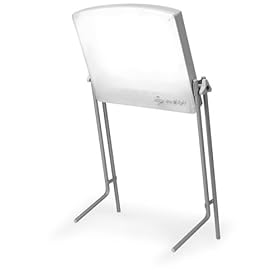
This desktop, natural panel light from Amazon is portable and easy to position for comfortable, healthy light.
As a bonus, I find that using this light to combat Jetlag when I return home from a trip significantly reduces the amount of time I feel out of sync!
5)
There is a natural rhythm to productivity and listening to yourself to know when those times are is very important. No one is productive from 9 until 5pm. Being aware of the queues you feel and acting on them dramatically increases productivity.
6)
Music and ambient noise can queue productivity. Personally I am usually the most productive between 6am and 11pm. I play energetic music that I like and "bust out the work" to get things done.
Other times of the day, I'll play low key music and contrast it with bits of high energy music from the morning when the waves of productivity come in.
CONCLUSION
You can't be told to be productive. You need to listen to yourself and learn how to use the queues that inject productivity into your day.
Using things such as music, environment, lighting, etc can help when combined with a clear and quiet mental state
Wednesday, January 21, 2009
I am trying to brainstorm products and services to sell online. I’m having a difficult time narrowing down the choices to put forth my best effort.
Dhawk Asks:
Do you pay for services on the web? What type of services do you pay for and how much do you pay per month?
Rob’s Answer:
This is an interesting question. Thank-you for posting it and making me reconsider the fundamentals of eccomerce.
1) DIRECT ANSWER
Personally, here are the things that I subscribe to or regularly buy:
Website Hosting (a couple of servers in a couple of locations)
iTunes
Audible
Geek uniforms from here: http://www.teefury.com/
One of the things that people won't necessarily admit to is online pornography subscriptions. While I've never subscribed to a site, I know that the revenue received from adult sites eclipses any other form of online sales. Personally, I chose not to do business in this arena but understand the importance of it online.
2) SPECULATION AND RESEARCH
Since the Internet changes perpetually, I try to constantly think about what people want to purchase and subscribe to.
This article lists 8 categories that I think pigeonhole current successful ecommerce:
http://www.kk.org/thetechnium/archives/2008/01/better_than_fre.php
Those categories include:
Immediacy
Personalization
Interpretation
Authenticity
Accessibility
Embodiment
Patronage
Findability
While this specific article discusses piracy and the changing practices of media distribution, I find these categories to be timely and accurate when applied across multiple arenas.
When evaluating new products and services to spend my time on, it is helpful to think about each of these 8 categories. If a product or service overlaps across 2 or more categories, the value of that product or service increases.
Combining these 8 categories with Maslow's Hierarchy of Needs results (more often than not in my experience) with a winner.
http://en.wikipedia.org/wiki/Maslow%27s_hierarchy_of_needs
Maslow quantified the basic needs of people. When these needs are met, people become compelled to purchase a product. When that product is compelling AND exists in one or more current economic trends, you again increase your odds of success.
3) REAL WORLD EXAMPLE
Mahalo Answers is a good example of a product that will likely be successful.
It fits into these categories:
Immediacy
Interpretation
Patronage
Findability
Mahalo Answers also fits into these Maslow groups:
Self-actualization
Esteem
Belonging
So Mahalo answers is (on the surface) a strong product. Some other factors that I would want to carefully review include: management, labour, structure, competition and revenue model. With clear and correct information on all of these things, you would have a good idea as to the specific strengths and weaknesses of the productat a low level.
I hope that this helps!
What do you think of this blog post about saving money by making smarter automotive decisions?
Used Car Genius Asks:
I'm most interested in hearing about how the topic affects you personally, and if reading that post would make you want to come back to the site for more information on saving money by making better automotive choices...
http://blog.usedcargenius.com/?p=178
http://blog.usedcargenius.com/?p=178
Rob’s Answer:
Personally, I am currently searching for a new (or used) car. Your article was interesting and while it didn't necessarily give me any new information or insight, I was glad to read it.
I think that it would be a good small town, local newspaper article but that it is not positioned well for a blog. Here's why:
1) Your points are clouded with words.
Cut down on the number of words you use and prove your points in other ways.
2) You have an interesting title, but I don't feel like the article gave me an answer.
Trust is a funny thing online and if you're trying to build readership, honest, well proven / supported posts are key. I like that you made that post and mentioned that you own a dealership, but I don't like generalities that made up the proof.
3) I Would Like More Information
In your 4th paragraph, you outline the meat and potatoes of the solution. This is where I want more information that is easy to find. I didn't feel the desire to click through to any other articles on your blog because they weren't avaliable to me where and when I needed them.
You might have some other great articles about "researching a puchrase", finding "a great deal from a motivated seller", "finding a great repair shop based on trusted recommendations", etc. But, how would I know? When I've scrolled down to that section of the page, all I see are random tags and categories.
Contentiously think about where people are looking when they read your articles. Provide links (images work best) to alternate articles, advertising, or off-site information. This is referred to as contextually generated content and is most effective on small growing blogs manually.
I hope that these few points help Used Car Genius!
Monday, January 19, 2009
How Much Should A Small Business Website Realistically Cost?
Scogs asks:
“How much should a small business website realistically cost?
I'm looking at getting a website built for a small business. I won't need any copy written, nor will I need a logo designed. All I really need is a few templates built and a lead capture form and DB (I'm pretty savvy at managing web sites, just not designing them). Anybody have any experience with actual costs? Any recommendations would be helpful as well.”
Rob’s Answer:
This question has too many variables to be answered adequately. Further clarification is required to provide a clear and accurate answer.
It sounds like you're in the same boat as many programmers. They can spin some outstanding code, but their code almost always looks better than their front-end design.
SOME GENERALITIES THAT YOU LIKELY KNOW:
A business website is an extension of your entire marketing plan. Websites have the unique advantage of being able to generate income; no other form of marketing can directly impact sales.
With these 2 facts in mind, it is important to design a clear, stylish, and above all else effective 24x7 online storefront for your business. At first glance, many inexperienced people will consider a "storefront" overkill for the first website that a small business creates. While I'm not necessarily suggesting full ready-to-go ecommerce functionality, I am suggesting that you take the look and feel of your store (or your brand) and convey the same feeling and information online. Every successful website follows this basic rule.
CREATING IT YOURSELF:
Unless your business is making websites, don't do it yourself. Websites take a lot of time to create and only someone who has a lot of experience can create a website that is polished and professional. You're good at whatever your business is - focus on that and focus on relaying the information that potential customers need.
It sounds like you're on the right path. If you have the skills to render some HTML (etc) then asking a pro for a nice design will work well.
GENERAL COSTS:
Basic websites (simple brochure) sites cost from $500 to $2000.
This cost would give you the basic design, a couple of blank pages to use as a template for additional content, graphics, coloring, consultation, etc.
The range in price will be based on experience. People with extensive portfolios can charge more since their work is proven.
PROJECT PLANNING:
There are a couple of different places that you can get design help. However, all of these sources will fail without a very clear outline of what you want. Compose a "RFQ" (Request for Quotation); this document should contain a full written description of what you want along with some hand sketched block illustrations outlining what you're thinking. While it's important to carefully outline what will make your project successful, allow the designer to be creative and think on his/her own.
SOURCES OF LABOUR:
1)
Review these gallery websites:
http://www.google.ca/search?q=CSS+Gallery&ie=utf-8&oe=utf-8&aq=t&rls=org.mozilla:en-US:official&client=firefox-a
Form a solid list of designers that you like. E-mail them your RFQ and ask them to return a quote.
2)
Submit your RFQ to web based freelance sites like these:
http://www.rentacoder.com/
http://www.getafreelancer.com/
http://www.elance.com/
http://www.guru.com/
http://www.scriptlance.com/
By finding a web designer using the first method, you'll receive a higher quality product, but you'll pay more. By finding a web designer using the second method, you'll pay less, consume more of your time, and receive lower quality work.
3)
Crowdsourcing works sometimes. For an upfront posting fee, people will submit designs and try to "win" the project at http://99designs.com/
Best of luck Scogs. I really hope that this helps you out.
Source(s):
I'm an I.T. pro with specific experience developing websites.
It sounds like you're in the same boat as many programmers. They can spin some outstanding code, but their code almost always looks better than their front-end design.
SOME GENERALITIES THAT YOU LIKELY KNOW:
A business website is an extension of your entire marketing plan. Websites have the unique advantage of being able to generate income; no other form of marketing can directly impact sales.
With these 2 facts in mind, it is important to design a clear, stylish, and above all else effective 24x7 online storefront for your business. At first glance, many inexperienced people will consider a "storefront" overkill for the first website that a small business creates. While I'm not necessarily suggesting full ready-to-go ecommerce functionality, I am suggesting that you take the look and feel of your store (or your brand) and convey the same feeling and information online. Every successful website follows this basic rule.
CREATING IT YOURSELF:
Unless your business is making websites, don't do it yourself. Websites take a lot of time to create and only someone who has a lot of experience can create a website that is polished and professional. You're good at whatever your business is - focus on that and focus on relaying the information that potential customers need.
It sounds like you're on the right path. If you have the skills to render some HTML (etc) then asking a pro for a nice design will work well.
GENERAL COSTS:
Basic websites (simple brochure) sites cost from $500 to $2000.
This cost would give you the basic design, a couple of blank pages to use as a template for additional content, graphics, coloring, consultation, etc.
The range in price will be based on experience. People with extensive portfolios can charge more since their work is proven.
PROJECT PLANNING:
There are a couple of different places that you can get design help. However, all of these sources will fail without a very clear outline of what you want. Compose a "RFQ" (Request for Quotation); this document should contain a full written description of what you want along with some hand sketched block illustrations outlining what you're thinking. While it's important to carefully outline what will make your project successful, allow the designer to be creative and think on his/her own.
SOURCES OF LABOUR:
1)
Review these gallery websites:
http://www.google.ca/search?q=CSS+Gallery&ie=utf-8&oe=utf-8&aq=t&rls=org.mozilla:en-US:official&client=firefox-a
Form a solid list of designers that you like. E-mail them your RFQ and ask them to return a quote.
2)
Submit your RFQ to web based freelance sites like these:
http://www.rentacoder.com/
http://www.getafreelancer.com/
http://www.elance.com/
http://www.guru.com/
http://www.scriptlance.com/
By finding a web designer using the first method, you'll receive a higher quality product, but you'll pay more. By finding a web designer using the second method, you'll pay less, consume more of your time, and receive lower quality work.
3)
Crowdsourcing works sometimes. For an upfront posting fee, people will submit designs and try to "win" the project at http://99designs.com/
Best of luck Scogs. I really hope that this helps you out.
Source(s):
I'm an I.T. pro with specific experience developing websites.
Subscribe to:
Posts (Atom)
